
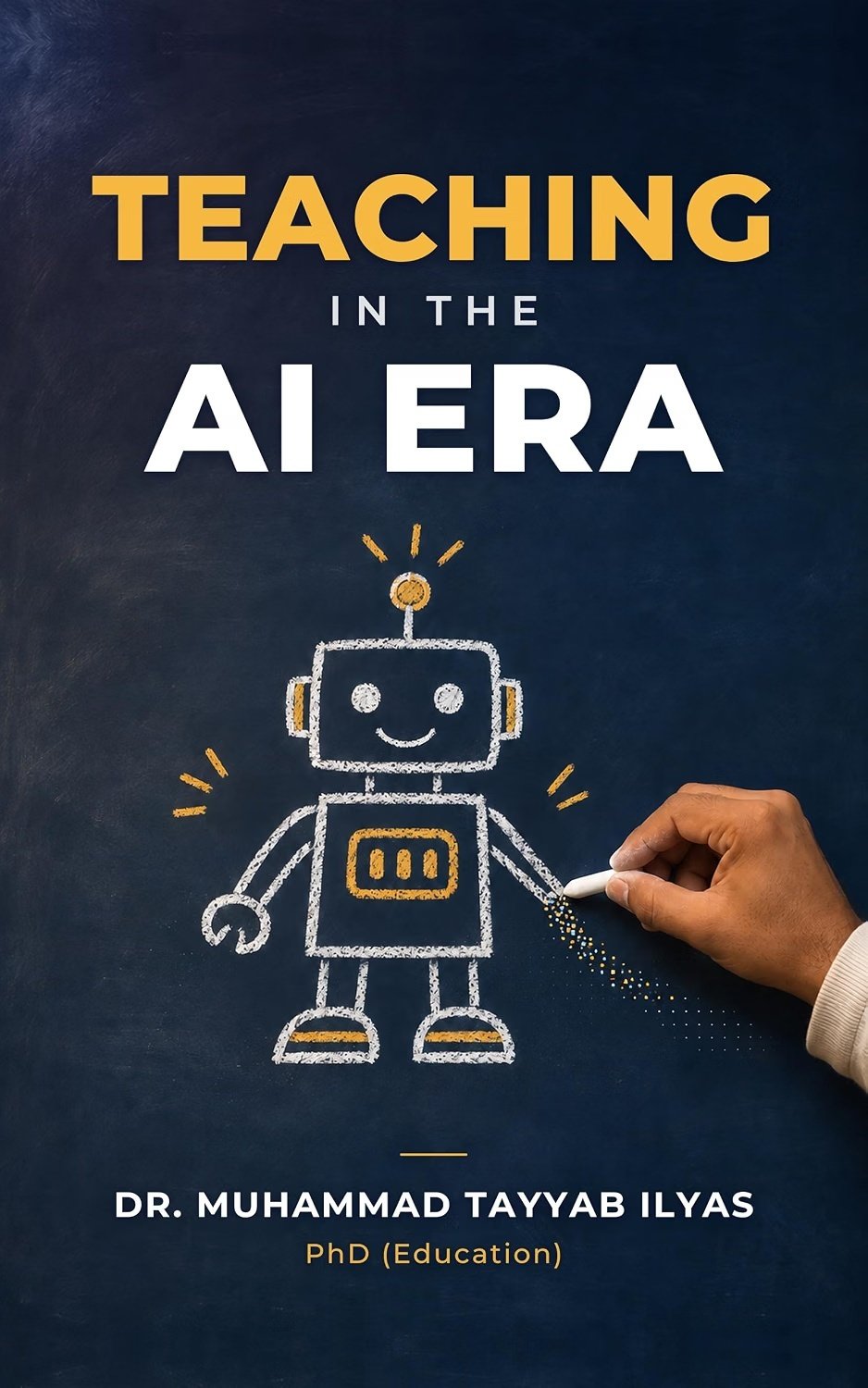
FREE KINDLE EBOOK
A chatbot can now write your students’ homework in seconds. It cannot do their learning for them. What should a teacher do?
Not panic, and not pretend nothing has changed. Most of what teachers hear about AI is hype or fear. Neither helps on an ordinary Tuesday. This book does.
Teaching in the AI Era is a teacher’s book, written by a teacher. It sets out what has changed, what the evidence can and cannot yet say, and what to do with the students in front of you, in classrooms with thirty students, one timetable and sometimes one shared phone.
By the last page you will be able to
set homework a chatbot cannot do for your students
tell a strong study from a hopeful one, because every source is graded by the weight it can bear
plan with AI while keeping your own judgement
design assessment around what a mark can honestly claim about a learner
explain each choice to a colleague, a parent or a child
Inside the book
Thirteen chapters: homework, what AI is and is not, the part of teaching no machine can do, planning, learning when answers are free, fair assessment, access and equity, safety and honesty, AI-literate learners, the teacher as learner, the whole school, real understanding in higher education, and what endures
Every chapter ends with classroom routines, a section for schools with one shared phone or no connection, questions for a staff meeting, and a table linking the chapter to DigCompEdu, UNESCO’s AI competency framework for teachers and the author’s Infrastructure-First Digital Competence framework
Six diagrams, twelve lesson cards and seven worksheets to copy
Stories from real classrooms and from the author’s own interviews with university teachers in Pakistan
Nearly five hundred studies and policy documents, from England, the United States, Europe, Pakistan, India, Nigeria, Ghana, Kenya and Sierra Leone
Who it is for
Primary and secondary teachers in any subject, university lecturers, school leaders and teacher educators, wherever they teach. The examples assume no particular product and no well-equipped school.
AI has changed what students can hand in. It has not changed what they need to learn. That part still belongs to the teacher.
About the author
Dr Muhammad Tayyab Ilyas taught science and mathematics in a government elementary school in Gujranwala, Pakistan, then served five years as the district’s assistant education officer and teacher trainer. His PhD in Education at the Universitat Autònoma de Barcelona studied how university teachers in Pakistan bring technology into their teaching. He is also an AI engineer and the founder of PakEdX, an AI platform for teachers in Pakistan.